
An efficient logistics system requires a tailor-made Mesh network
Date:2023-09-19
Author: Electronics enthusiast
Electronics Fan Network reports (by Zhou Kaiyang) that the many-to-many Mesh network topology has attracted much attention since its introduction. Now more and more wireless communication technologies and IoT applications are beginning to use this solution to efficiently transmit data to as many device nodes as possible. With the large-scale expansion of the number of wireless IoT devices and the continuous improvement of Mesh network technology, both smart homes and industrial automation are gradually introducing Mesh networks, a solution for interconnecting nodes.
In the smart home scenario, even if the wireless signal is blocked, it can be relayed through the nodes of the shortest path to form a local area network. Even if a single node fails, another alternative path can be found to transmit the signal. This is one of the biggest advantages of Mesh networks, the self-healing capability.
In the field of logistics, small, low-power smart sensors and easy-to-build and easy-to-manage logistics IoT platforms have long been on the agenda. However, in terms of local networking solutions, compared with common smart home scenarios, the characteristics of logistics scenarios put forward additional requirements for Mesh networks. Choosing a suitable communication protocol for logistics Mesh networks has also become a problem that troubles the smart logistics industry.

Image source network
Bluetooth Mesh与Wi-Fi Mesh
There are many mainstream protocols that support Mesh networking, such as Bluetooth, Wi-Fi, Zigbee and Thread, and they also have their own advantages. Bluetooth mesh, launched by the Bluetooth SIG in 2017, adopts a many-to-many topology architecture and a two-way transmission design. Due to its advantages such as fast deployment, low hardware cost and multiple connected devices, Bluetooth mesh is widely used in various smart IoT scenarios, such as smart home lighting, commercial lighting, warehouse lighting, etc.
Another widely used Mesh technology is Wi-Fi Mesh. Compared with Bluetooth Mesh, Wi-Fi Mesh has a faster transmission rate and can be used to transmit large data such as multimedia files. Although Wi-Fi is one of the most commonly used wireless technologies, its shortcomings are also obvious. First, the transmission distance is still relatively short, and for some battery-powered IoT applications, this is not an energy-saving networking solution.
The logistics sector lacks a perfect Mesh solution
Smart logistics warehousing involves many industries, such as product manufacturers, which have essential rigid requirements for warehousing supply from raw material procurement, transportation, warehousing, and supply. The warehousing industry can provide timely distribution when manufacturers need raw materials, so it will provide manufacturers with stable supply demand so that their production lines can operate normally. Manufacturers themselves have high demands for warehousing operations. In order to avoid large-scale hoarding of products, the intervention of intelligent equipment will help build reasonable and intelligent operations in the warehouse and effectively improve the comprehensive capabilities of the production line. As for downstream dealers and shops, the demand for the warehousing industry will be simpler, mainly designing outbound, inbound, sorting, palletizing, etc., to provide products to companies and customers who need products in a timely and effective manner, and to provide more comprehensive logistics information flow when the packaging product flow is in normal circulation. To ensure that there is corresponding data information in each link, to ensure that the product is safe, controllable and traceable.

Image source network
From all angles, in the sub-sectors of logistics warehousing and pickup, Bluetooth Mesh is very suitable for the promotion of low-cost large-scale deployment of Mesh network technology, especially in logistics sites such as post stations that solve the pain point of the "last mile", where smart electronic tags are often used. For such applications, Bluetooth Mesh technology still has many pain points, the first of which is power consumption. Although compared to Wi-Fi and Zigbee, Bluetooth mesh based on BLE technology can indeed be said to be a low-power solution, such low power consumption still has its scenario limitations.
Compared with scenarios such as smart homes, commercial lighting, and logistics lighting systems, although the communication frequency is relatively low, continuous scanning is still required to achieve many-to-many communication, so power consumption is difficult to reduce. Developers can only achieve power reduction through external wake-up strategies, such as using low-power sensors and LPN nodes, but this brings additional cost overhead. Therefore, we see that Bluetooth Mesh is basically used for products such as smart lamps that do not need to consider power supply, and is not used in battery-powered products.
In distribution logistics sites, registration, warehousing, outbound delivery and distribution are often the main tasks. If products such as smart light strips need to frequently replace batteries, their efficiency will inevitably be seriously slowed down. Therefore, if you want to truly reduce the manpower investment in logistics sites and realize smart logistics, low-power Mesh solutions are essential.
The second is anti-interference capability. Since Zigbee, Bluetooth and some Wi-Fi are all in the 2.4GHz frequency band, signal interference is relatively large. On the Mesh network, there are often more 2.4GHz frequency band devices, and they need to communicate all the time, so anti-interference design must be done well. Some Wi-Fi modules have digital filtering functions, or use external filters to suppress interference.
Other networking solutions have frequency hopping technology, automatically switching to channels with relatively less interference, and Wi-Fi can choose 5GHz or 6GHz, two relatively less-interfered frequency bands. In contrast, among Bluetooth wireless technologies, only LE ACL can achieve adaptive frequency modulation, but this technology is mainly used for multi-device connection of TWS true wireless Bluetooth headsets, and the number of connected devices is limited.
In logistics sites, if mesh networking is used for tag-type IoT devices, once the number of goods increases, interference will inevitably be too large, or even data transmission will be lost. Moreover, during shopping peak seasons such as 618 or Double 11, it is easy to see goods pile up and people overcrowded, and the mesh network will be more susceptible to interference at this time.
Finally, there is response time. In the last mile of logistics distribution, whether it is door-to-door delivery or pick-up at the site, timely finding the required express delivery is a key factor in determining logistics efficiency. This places high demands on the response speed and concurrency performance of the Mesh network.
The response time of traditional Wi-Fi Mesh and Bluetooth Mesh is not ideal. Although Wi-Fi Mesh can achieve seamless connection, the wireless signal is still not stable. Due to its traversal broadcast characteristics, Bluetooth Mesh will cause network storms when the number of connected devices increases, further extending the response time and possibly shortening battery life.
Spider Mesh was born to address the pain points of smart logistics
In order to solve the above pain points of realizing Mesh networking in the logistics field, Phyplus Technologies launched its own private Mesh protocol, Phyplus Spider Mesh, based on its PHY62 series chips. This solution uses a one-to-many topology interface and supports two-way synchronous data transmission. The peak power consumption of the PHY62 series is only 4.6/4mA, and the average power consumption of Phyplus Spider Mesh can be less than 10uA. For logistics label devices such as smart light strips, the frequency of battery replacement is greatly reduced.
In terms of network distribution speed and scale, Phyplus Spider Mesh can access the network in seconds and supports ultra-large-scale network expansion. In terms of anti-interference, Phyplus Spider Mesh supports adaptive frequency hopping and will automatically update channels with lower interference. And due to its two-way synchronization and one-to-many characteristics, the interaction of all device data can be completed within 2 seconds. Therefore, Phyplus Spider Mesh can access the network, control and respond in seconds.
The PHY62 series chips also support communication protocols such as BLE and Zigbee. Phyplus Technologies has also launched a multi-direct connection solution based on the "multi-master and multi-slave multi-connection technology", which realizes multi-host control of smart devices through "Mesh networking + BLE direct connection + Zigbee". Consumers can control smart devices integrated with the PHY62 series chips in real time through the IoT cloud platform, manufacturer-customized apps and local wireless switches, realizing true cross-platform interoperability.
In addition, Phyplus's PHY62 series chips have a full protocol stack with independent intellectual property rights, which enables a single chip to support multiple wireless communication protocols. This means that devices integrated with the PHY62 series chips have ultra-high compatibility and can be compatible with multiple Mesh networks. At the same time, they can access Spider Mesh and other mainstream Mesh, further improving the networking function in the logistics field.

Spider Mesh adds functionality to other networking protocols
Final Thoughts
For the logistics industry that pursues efficiency, a stable, reliable and easy-to-large-scale deployment Mesh networking solution is essential. Especially as more and more logistics companies are moving towards intelligent networking, the combination of Mesh networks and their logistics networks can save considerable human and material resources with only minimal hardware deployment costs.
Each major Mesh networking protocol has its own advantages in different application fields. For example, SIG Mesh is more suitable for smart lighting control, Wi-Fi Mesh is more suitable for smart homes, smart buildings and other applications, and Phyplus Technologies's Phyplus Spider Mesh is just such a Mesh protocol that complements the large-scale networking needs in the logistics field.
Phyplus Technologies is an internationally leading high-performance RF and mixed-signal chip design company with a complete design, mass production and quality system. It has independently developed a complete high-performance mixed-signal IP system with independent intellectual property rights in 28nm/55nm/180nm processes. It has core technologies such as independent intellectual property multi-standard communication protocol stack, high-performance and low-power RF circuit, high-performance ADC/DAC, ultra-high-speed SerDes and clock, flexible and secure system-level chip architecture, digital signal processing algorithm, etc. It focuses on providing high-performance and low-power wireless communication chips and self-controllable systematic solutions for smart home, industrial control, logistics management, smart lighting and other fields. Phyplus's low-power wireless communication system-level chip has obtained certifications such as BLE 5.2, SIG-Mesh, CSA compatible platform, Apple MFi, Tencent Cloud, etc. from the International Bluetooth Alliance, and has been introduced on a large scale to more than 100 IoT customers at home and abroad. According to statistics from TSR, a professional survey company in the global electronics field, the company's BLE shipments in 2022 will reach the fifth place in the world.
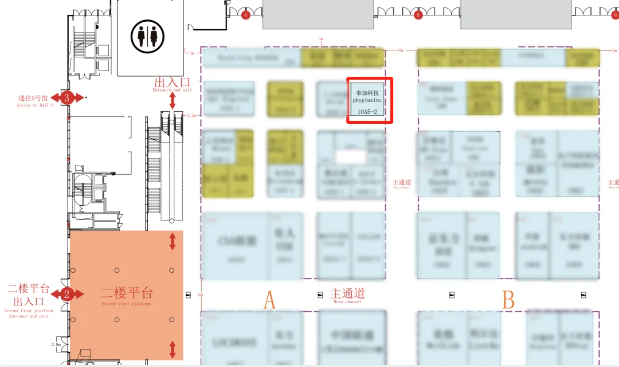
From September 20 to September 22, at the IOTE exhibition in Shenzhen World Exhibition and Convention Center (Bao'an) at Hall 10, Booth 10A5-2, Pjyplus Technologies will also showcase its innovative Spider Mesh and other IoT/logistics solutions with its PHY62 series chips.
Source: https://mp.weixin.qq.com/s/9uB40fnt69N-ekcrhQL0AQ
Related Links

Contact Us
3/F, Building 23, Lane 676, Wuxing Road, Pudong New Area, Shanghai